


Benefits of a system focus
- Focus on the work that brings the most value
- Deliver more of that work with today’s resources
- Continually raise performance as a learning organisation
Theory of Constraints represents a breakthrough way to realise operational benefits. Nothing else comes close for scientific rigour, or strategy that you can directly apply. Unfortunately, it’s not pixie dust you can just sprinkle onto PowerPoint and have everyone magically understand what needs to happen. As one of our clients said, ‘If you want to change the way you work, you need to change the way you work.’
Systems Thinking
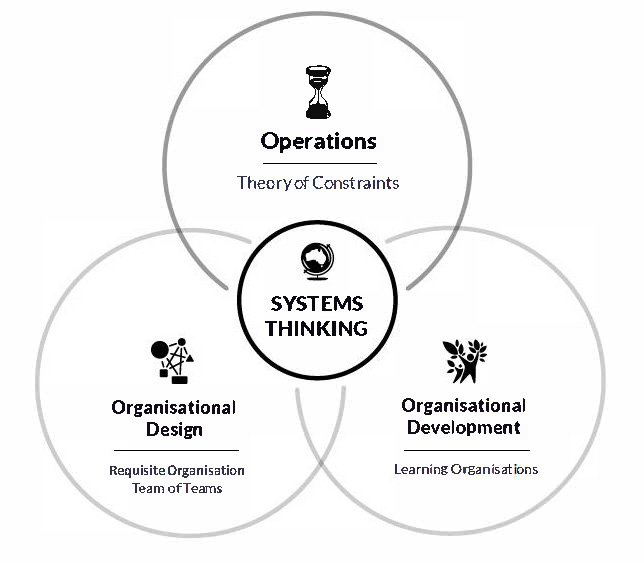
While systemic innovation in Operations is the clear driver for progress, you won’t realise the benefits unless you inspire everyone involved to do better work. We call it developing the amazing in people.
For that, you need to consider Organisational Design—who is accountable for what? Are you working in silos, or are you a ‘team of teams’? Then address Organisational Development—do you share a vision, mental models and an appetite for personal mastery and ways to learn as a team?
Systems thinking is what binds these three circles together.
“If you want to change the way you work, you need to change the way you work.”
Do better work and win remarkable results with systems thinking. See how to apply it through our work management services.


