


We help organisations work smarter through innovations in productivity that challenge conventional thinking, empower the individual and transform with technology.
When you see your value-creation engine as a whole system, you can find the constraint that’s holding you back, then focus your resources to exploit it to maximum effect.
What is the Theory of Constraints?
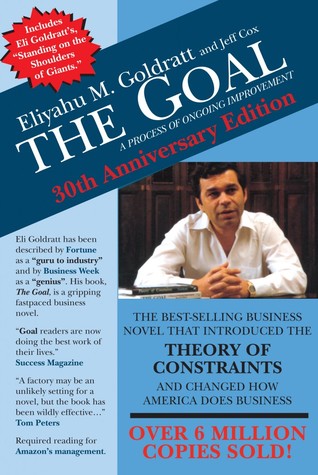
TOC is a powerful system of management that helps you focus on your goal. Developed by the late physicist-turned-management consultant Dr Eli Goldratt, the theory applies scientific principles to practical business challenges. Through rigorous systems thinking, Goldratt challenged conventional wisdom and changed the way organisations focus on results.
The method provides logical tools to construct, test and communicate strategic intent (Logical Thinking Process); three methods to increase the flow of value in areas such as projects (CCPM), production (DBR) and distribution (DBM); and a goal measurement (Constraint Accounting) framework to maximise profit and drive optimal operations.
We are experts in applying the TOC to key business activities such as operations and program management. Rather than cutting costs to achieve today’s results, we focus on releasing more power from existing resources within your system to generate more throughput. In an era of continuing austerity, this is particularly appealing for large firms who can avoid laying off staff while growing confidently into the future.
-
Our 5-Step FOCUS

Theory of Constraints insists on the physical law that every system must have a weak link: the constraint. Through a simple five-step process, you can improve the way you manage people, processes and technology to deliver the goal. We remember it with our simple acronym: FOCUS.

-
The simplest equation
For more than 15 years, we’ve been using the measures developed under the TOC constraint accounting methodology. The three fundamental measures are as powerful as they are simple:
Throughput (T) is the value of sales less the costs directly associated with those sales, for example commissions. Accounting professionals call this measure contribution margin. It expressly excludes labour costs that are a fixed part of the payroll.
Operating expense (OE) is defined as the total cost of fixed labour and all overheads.
Investment (I) is all value locked into fixed and current assets, including raw material, work in process and finished goods not yet invoiced.When you deduct Operating Expense from Throughput, you’re left with profit. And the ratio of profit to investment will yield your return on investment (ROI).
To improve ROI, you have three levers: increase throughput, decrease operating expense, or decrease investment.
Since both operating expense and investment are far more limited in their scope for reduction than throughput is for its scope for amplification, you should almost always focus on finding ways to increase throughput.
See more on Goal Measurement
Leading TOC experts
- Ensemble has pioneered the application of Critical Chain Project Management to complex global technology transformation programs.
- Our cases demonstrate labour and capital productivity improvements that typically exceed 25%, and often much more.
- Since our approach is an open system, we can work with all levels of operational and project maturity.


